


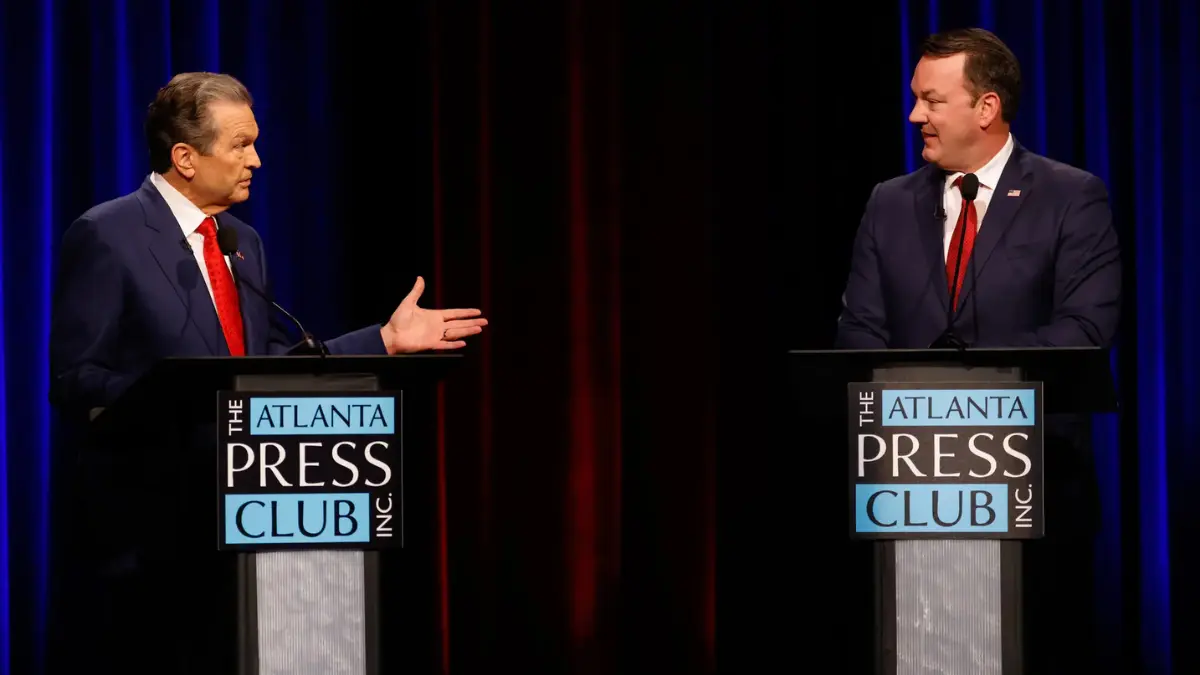
Georgia’s Republican primary elections revealed the growing influence of Donald Trump within the GOP as key races, runoff battles, and MAGA-backed candidates reshaped the state’s political landscape.
Georgia voters headed to the polls this week in one of the most closely watched primary elections in the country, delivering results that could reshape the future of both the Republican Party and the state’s political leadership ahead of the 2026 general election.
At the center of the political drama was the continued influence of former President Donald Trump, whose endorsements and MAGA-aligned messaging played a major role across several high-profile races.
One of the biggest storylines emerged from Georgia’s Republican gubernatorial contest, where the crowded field failed to produce an outright winner, forcing the race into a runoff election. The contest quickly became a national political battleground as establishment conservatives and Trump-backed candidates fought for control of the GOP’s future direction.
Lt. Gov. Burt Jones, widely viewed as the candidate closest to Trump’s political movement, secured a strong showing and advanced to the runoff. Jones has built his campaign around conservative priorities including border security, election integrity, and opposition to federal spending policies. His performance reinforced the strength of MAGA influence inside Georgia’s Republican base.
Read also…Tom Kane, Legendary Voice of Yoda and Professor Utonium, Dies at 64
Meanwhile, Attorney General Chris Carr and other establishment-backed Republicans struggled to generate the same level of grassroots enthusiasm seen among Trump-aligned voters. Political analysts say the results highlight how deeply Trump’s political brand still resonates with Republican primary voters in Georgia despite years of tension between Trump and parts of the state GOP leadership.
Democrats are also closely monitoring the Republican battle as they prepare for a competitive statewide election cycle. Georgia has become one of the nation’s most important political swing states over the last several election cycles, with razor-thin margins deciding presidential, Senate, and gubernatorial races.
On the Democratic side, several local and congressional primaries also attracted heavy attention, particularly in metro Atlanta districts where turnout remained strong. Election officials reported steady voter participation throughout the day, with several counties experiencing long lines during peak hours.
The Republican runoff is expected to intensify over the coming weeks, with both candidates likely to compete aggressively for Trump’s endorsement, conservative donors, and suburban Republican voters. Political strategists believe the outcome could become a national indicator of where the Republican Party is headed before the 2028 presidential cycle begins.
Trump’s presence continues to shape nearly every major Republican contest in Georgia. From campaign advertisements to debate messaging, candidates repeatedly focused on loyalty to Trump-era policies and conservative cultural issues that energize the party’s core voters.
For many Republican voters, the election was about more than selecting nominees. It became a broader fight over the identity of the GOP itself — whether the party will remain firmly aligned with Trump’s populist movement or shift back toward more traditional conservative leadership.
As Georgia moves toward runoff season, national attention will remain locked on the state. With control of future elections, party influence, and potential presidential ambitions all tied to the results, Georgia once again finds itself at the center of American politics.