


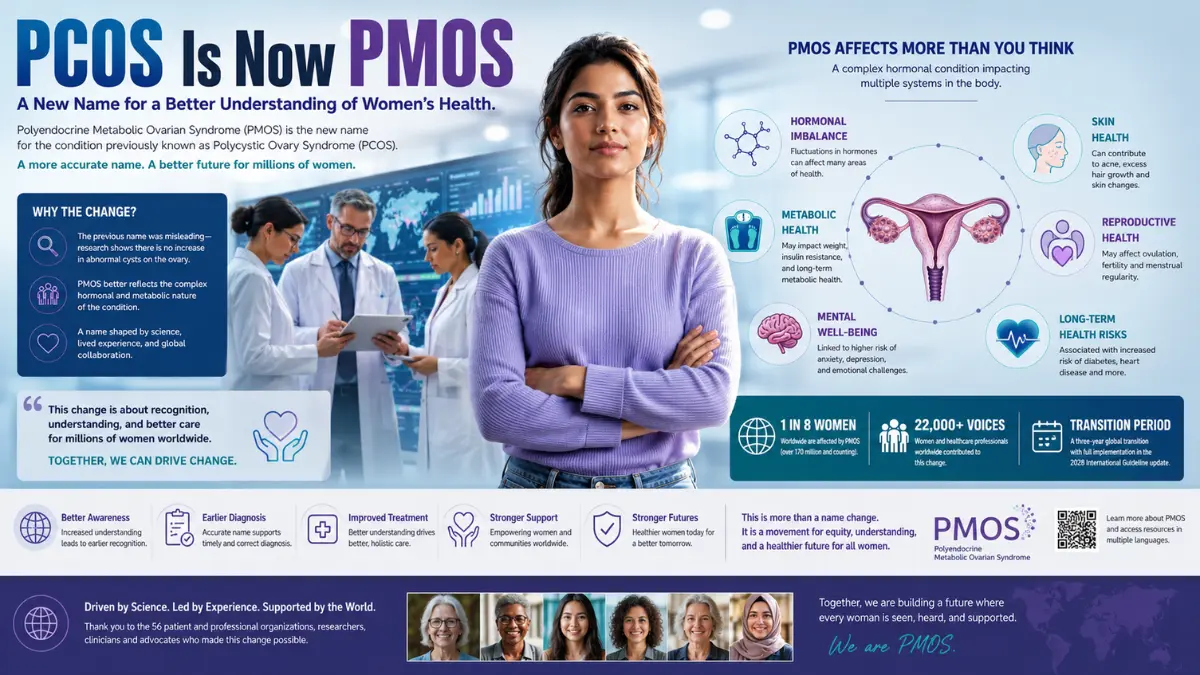
PCOS has officially been renamed PMOS (Polyendocrine Metabolic Ovarian Syndrome). Learn why experts changed the name, what PMOS means, and how it could improve diagnosis and treatment worldwide.
PCOS Officially Renamed PMOS: A Major Shift in Women’s Health Awareness
A major change has been announced in the world of women’s health as Polycystic Ovary Syndrome, commonly known as PCOS, has officially been renamed Polyendocrine Metabolic Ovarian Syndrome (PMOS).
The condition affects more than 170 million women globally, with experts estimating that around one in eight women live with the disorder. Health professionals and patient advocacy groups say the new name better reflects the true complexity of the condition and could help improve diagnosis, treatment, and long-term care.
The renaming effort involved more than 50 international medical and patient organizations, including the Endocrine Society.
Why the Name PCOS Was Changed
For years, doctors and researchers argued that the term “Polycystic Ovary Syndrome” was medically misleading.
Despite the name, experts say the condition does not actually involve abnormal ovarian cysts in the way many people believe. Instead, it is a complex hormonal and metabolic disorder that can affect multiple systems in the body.
Read also…Stephen Colbert Reunites With Strike Force Five Hosts Ahead of The Late Show Ending
PMOS is associated with hormonal imbalances that can impact weight, metabolism, mental health, fertility, skin health, and reproductive function.
Researchers believed the previous name placed too much attention on ovaries and “cysts,” causing confusion among patients and even healthcare professionals. According to experts, this misunderstanding often contributed to delayed diagnosis and incomplete treatment.
Global Experts Led a 14-Year Effort
The name change was led by Helena Teede, Director of the Monash Centre for Health Research and Implementation and an endocrinologist at Monash Health.
Teede said decades of research and direct patient experience showed that the old name no longer matched current scientific understanding of the condition.
The process took 14 years of collaboration involving doctors, researchers, and women living with the disorder. Findings related to the name change were published in The Lancet.
An additional research paper by the same group reportedly confirmed there is no abnormal increase in ovarian cysts linked to the condition, further supporting the need for a new medical term.
Thousands of Patients Took Part
The initiative focused heavily on patient experiences and global representation.
More than 22,000 survey responses were collected during the consultation process, while international workshops included both healthcare professionals and women directly affected by the condition.
Experts said cultural sensitivity also played a major role in choosing the new name. Organizers wanted terminology that was scientifically accurate while also reducing stigma in different countries and communities.
Terhi Piltonen, President of the International Androgen Excess and PCOS Society, explained that some reproductive health terms can create social stigma for women in certain cultures. The new name was designed to be more inclusive and globally acceptable.
What PMOS Means
The new term “Polyendocrine Metabolic Ovarian Syndrome” highlights the broader hormonal and metabolic nature of the condition.
Doctors say the updated terminology helps emphasize that PMOS is not only a reproductive issue but also a long-term health condition connected to metabolism, hormones, and overall wellbeing.
Advocates believe this could encourage better screening, earlier diagnosis, and improved healthcare policies worldwide.
Rachel Morman said the old name failed to reflect the true seriousness of the condition. She noted that leading with the hormonal and metabolic aspects of the disorder will help shift public understanding and improve healthcare conversations.
Transition to PMOS Will Continue Until 2028
Medical organizations have planned a three-year international transition period to introduce the new name across healthcare systems, research communities, and public awareness campaigns.
The updated term PMOS is expected to be fully adopted in the 2028 international clinical guideline update.
Researchers and advocacy groups hope the change marks the beginning of major improvements in women’s healthcare, scientific research, and social awareness surrounding the condition.
A Landmark Moment in Women’s Health
Women who participated in the process described the name change as an important step toward recognition and accountability.
Advocates say the new terminology validates the experiences of millions of women who have long struggled with delayed diagnoses, misunderstanding, and inadequate treatment.
With PMOS now officially introduced, experts believe healthcare systems around the world will begin treating the condition with the seriousness and attention it deserves.