


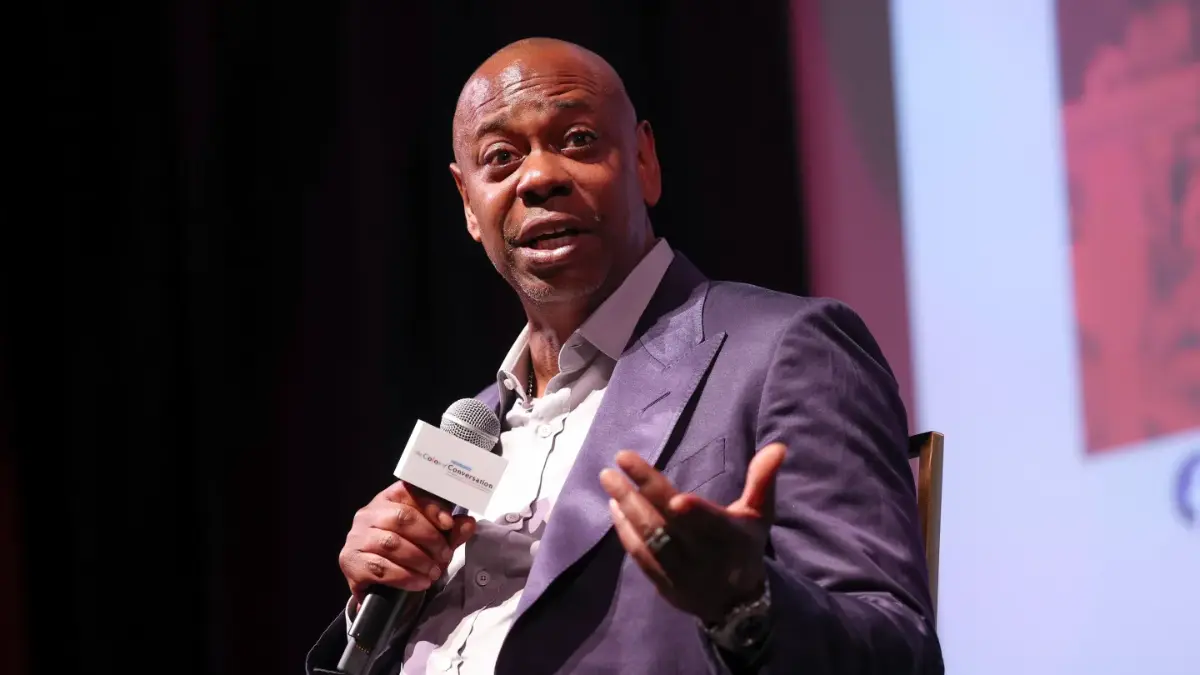
Dave Chappelle releases an unannounced Netflix special filmed in Washington, D.C., tackling Saudi Arabia, U.S. politics, Charlie Kirk, and cancel culture.
Comedy icon Dave Chappelle has once again ignited conversation across the cultural and political spectrum with the surprise release of his latest Netflix stand-up special, Dave Chappelle: The Unstoppable…. Dropping without advance promotion late Friday night, the special landed on Netflix shortly after the highly anticipated Jake Paul vs. Anthony Joshua boxing match, catching both fans and critics off guard.
Filmed in October in Chappelle’s hometown of Washington, D.C., the special finds the comedian in familiar territory—both geographically and thematically. Known for blending sharp humor with pointed social commentary, Chappelle wastes little time diving into American politics, global hypocrisy, free speech, and the backlash surrounding his recent performance at the Riyadh Comedy Festival in Saudi Arabia.
Returning Home to “Chocolate City”
Taking the stage in a camouflage jacket featuring Colin Kaepernick’s name and number, Chappelle opens with a sense of urgency. “We’ve got a lot to talk about,” he tells the crowd, explaining why he felt compelled to return to Washington, D.C., following the deployment of the National Guard during political unrest tied to Donald Trump’s administration.
Read also… Bowen Yang Leaves Saturday Night Live After Christmas Episode, Ending Seven-Year Run
“They’re trying to take the chocolate out of Chocolate City,” Chappelle quips, referencing the city’s historic Black identity. While he admits he arrived angry and ready to confront the state of the nation, he also offers an unexpected observation: the city looked cleaner than he remembered. The remark sets the tone for a set filled with contradictions, humor, and self-awareness.
Addressing the Saudi Arabia Backlash
A major portion of The Unstoppable… is devoted to Chappelle’s controversial appearance at the Riyadh Comedy Festival. The comedian acknowledges the criticism head-on, saying he has received “a lot of grief” for performing in Saudi Arabia. He specifically calls out Bill Maher, dismissing Maher’s criticism with trademark bluntness and profanity.
Chappelle insists he feels no guilt about the performance, pushing back against accusations that he compromised his principles. While expressing sympathy for the late journalist Jamal Khashoggi, he challenges what he sees as selective outrage in global politics, pointing to the deaths of journalists elsewhere as an uncomfortable comparison.
Reiterating a statement he has made in the past, Chappelle argues that it is “easier to talk” in Saudi Arabia than in the United States, particularly after facing intense backlash for jokes about the transgender community. In one of the special’s most provocative moments, he claims that those jokes were well received abroad, a comment likely to further fuel debate.
Free Speech and American Censorship
Throughout the set, Chappelle repeatedly returns to the theme of free speech—or what he believes is the erosion of it in the U.S. He references late-night host Jimmy Kimmel and his recent suspension as an example of how voices can be silenced in American media.
Chappelle also jokingly suggests that he earned $6 million for his Saudi appearance, adding that financial independence allows him to say “no” in America. “It feels good to be free,” he says, framing his global performances as a form of leverage rather than endorsement.
Reflections on Violence and Political Fear
One of the most serious segments of the special centers on the assassination of Charlie Kirk. Chappelle admits the news deeply unsettled him, particularly as someone whose livelihood depends on speaking publicly.
He addresses early reports—later corrected—that claimed messages referencing transgender issues were found on the bullets used in the attack. In a moment blending fear and dark humor, Chappelle describes worrying that he himself could become a target. He also rejects exaggerated comparisons between Kirk and Martin Luther King Jr., acknowledging the tragedy of both deaths while firmly stating the similarities end there.
Personal Stories and Complicated Loyalties
Chappelle also touches on the sentencing of Sean Combs, revealing a personal connection that complicates his feelings. He recalls being attacked onstage at the Hollywood Bowl in Los Angeles and credits Combs with tackling the attacker and potentially saving his life.
While expressing gratitude, Chappelle also acknowledges the seriousness of the allegations raised by Combs’ former partner Cassie, emphasizing that he is not minimizing her experience or suffering.
A Message to Washington, D.C.
As the special draws to a close, Chappelle shifts from provocation to reflection. Speaking directly to the D.C. audience, he urges them to remain grounded amid political pressure and polarization. “We are a community and we will stay sane together,” he says, encouraging unity and patience as the country navigates ongoing turmoil.
In a final twist, Chappelle jokes about creating a “code word” to signal if he has been compromised or pressured into changing his views. The phrase he lands on—deliberately chosen for shock value—underscores his fear of being co-opted and misunderstood.
Another Chapter in a Polarizing Career
With Dave Chappelle: The Unstoppable…, the comedian proves once again that he has no intention of softening his approach. Whether praised as a fearless truth-teller or criticized for crossing lines, Chappelle remains one of the most influential—and divisive—voices in modern comedy.
Love him or loathe him, his latest Netflix special ensures that the conversation around free speech, comedy, and cultural power is far from over.